
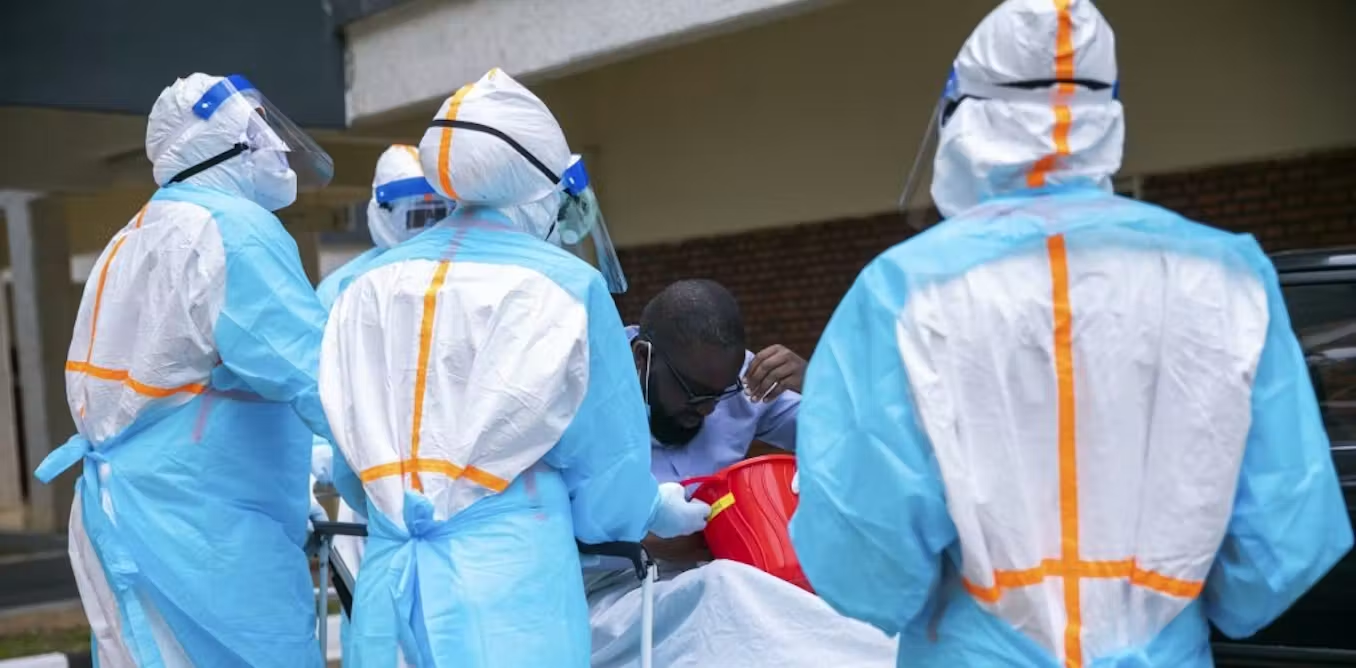
Health experts are sounding a loud alarm over the Bundibugyo Ebola outbreak currently ravaging the Democratic Republic of Congo, warning that its unprecedented speed and scale could propel it toward becoming a global pandemic. An infectious disease epidemiologist with firsthand experience from the devastating West African crisis of 2014 suggests that this particular surge is moving far faster than previous encounters with the virus. While earlier outbreaks took several months to hit the thousand case mark, this current wave reached that milestone in less than two months, suggesting a level of volatility that threatens to overwhelm existing containment strategies.
Much of the danger lies in the deceptive nature of the Bundibugyo strain. Unlike more common versions of Ebola that present immediate, severe symptoms like hemorrhaging and vomiting, this strain often begins with a dry phase characterized by fever, fatigue, and sore throats. These mild initial signs are easily mistaken for other common tropical illnesses, giving patients a false sense of security and delaying critical medical intervention. This window of uncertainty allows the virus to circulate silently within communities long before officials can formally declare an outbreak or begin tracking cases.
The risk is further amplified by the phenomenon of super-spreaders, individuals who disproportionately infect others due to behavioral patterns or biological factors. Experts note that since many people are unfamiliar with this specific strain’s symptoms, they inadvertently spread the pathogen to family members and caregivers. High-risk behaviors among young adults and delayed treatment sought for children have created perfect conditions for rapid transmission. When combined with regional instability caused by armed conflict and a shortage of specialized diagnostic kits, the ability to trace contacts becomes nearly impossible.
To prevent a localized tragedy from turning into a worldwide catastrophe, specialists argue for an immediate injection of sustained funding to secure personal protective equipment and laboratory supplies. They emphasize that clinical measures alone are not enough; there must be a concerted effort to engage trusted local leaders and religious figures to build community trust. By implementing rigorous screening at border posts and designing safer patient care pathways involving strict triage and isolation systems, international health bodies may still be able to bend the curve before the virus leaps beyond the continent’s borders.