
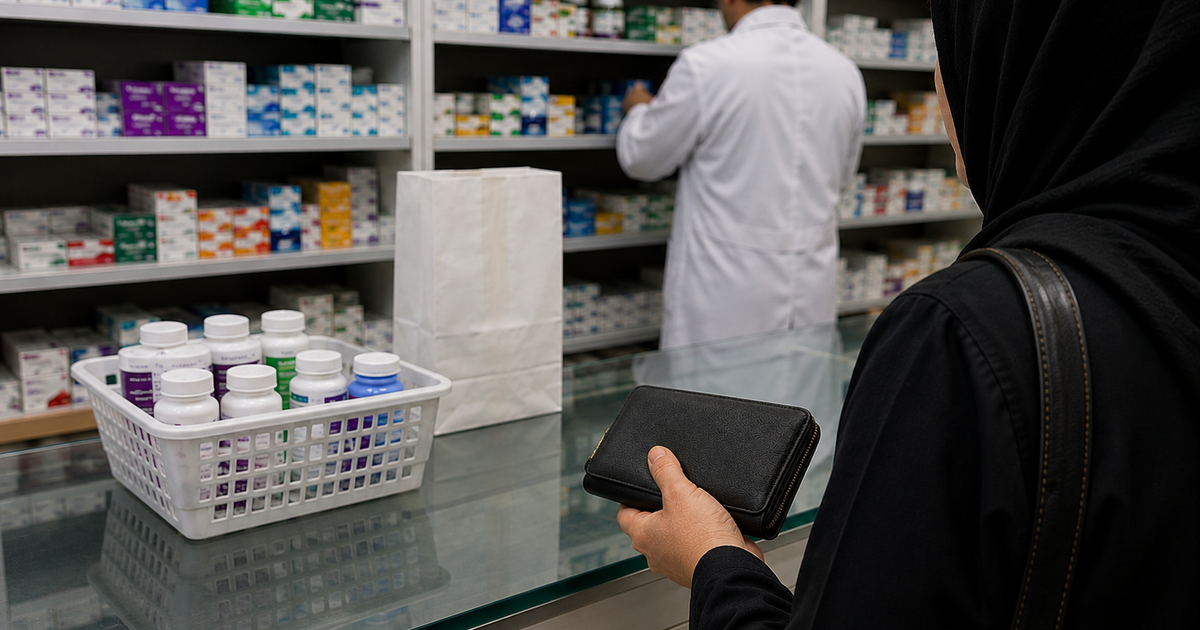
Across Iran, a deepening healthcare crisis is forcing ordinary citizens to make impossible choices between basic survival and essential medical treatment. Patients report that skyrocketing costs for prescriptions and diagnostic tests are consuming entire monthly salaries, leaving families terrified of even the simplest illnesses. For many, the reality is a slow descent into chronic health issues; one thirty three year old man shared that the prohibitive cost of dental work has left him missing half his teeth, describing a humiliating quality of life that has somehow become normalized.
The financial strain is exacerbated by a crumbling insurance system. While the state run Social Security Organization is meant to shield citizens from high costs, many providers now demand payment upfront. This leaves patients to navigate a bureaucratic nightmare to seek reimbursements that often cover only half the expense. In some cases, single diagnostic scans for serious conditions can cost upwards of 210 million rials, which effectively wipes out the total monthly income for a typical worker earning between 200 and 250 million rials.
Government officials are acknowledging the severity of the situation behind closed doors. Salman Es haghi, a spokesman for parliament’s Health and Treatment Committee, recently revealed that dozens of critical medicines are in short supply and nearly a thousand others are facing various levels of scarcity. He noted that patients are now footing more than seventy percent of their own healthcare bills, far exceeding the official target of thirty percent. Most alarmingly, those battling cancer or blood disorders like hemophilia have begun abandoning their treatments entirely because they simply cannot afford the medication.
Looking forward, there are fears that the situation could shift from a crisis to what Es haghi calls a year of patient slaughter if current subsidies are lifted. The government has discussed removing preferential foreign currency rates used to import medical supplies as a way to fight corruption. However, experts warn that exposing imports to volatile free market exchange rates would send prices soaring further. With domestic insulin prices already jumping by hundreds of percent and general medication costs increasing sixteen fold in some instances, Iranians find themselves trapped between an unaffordable housing market and a healthcare system they can no longer reach.