
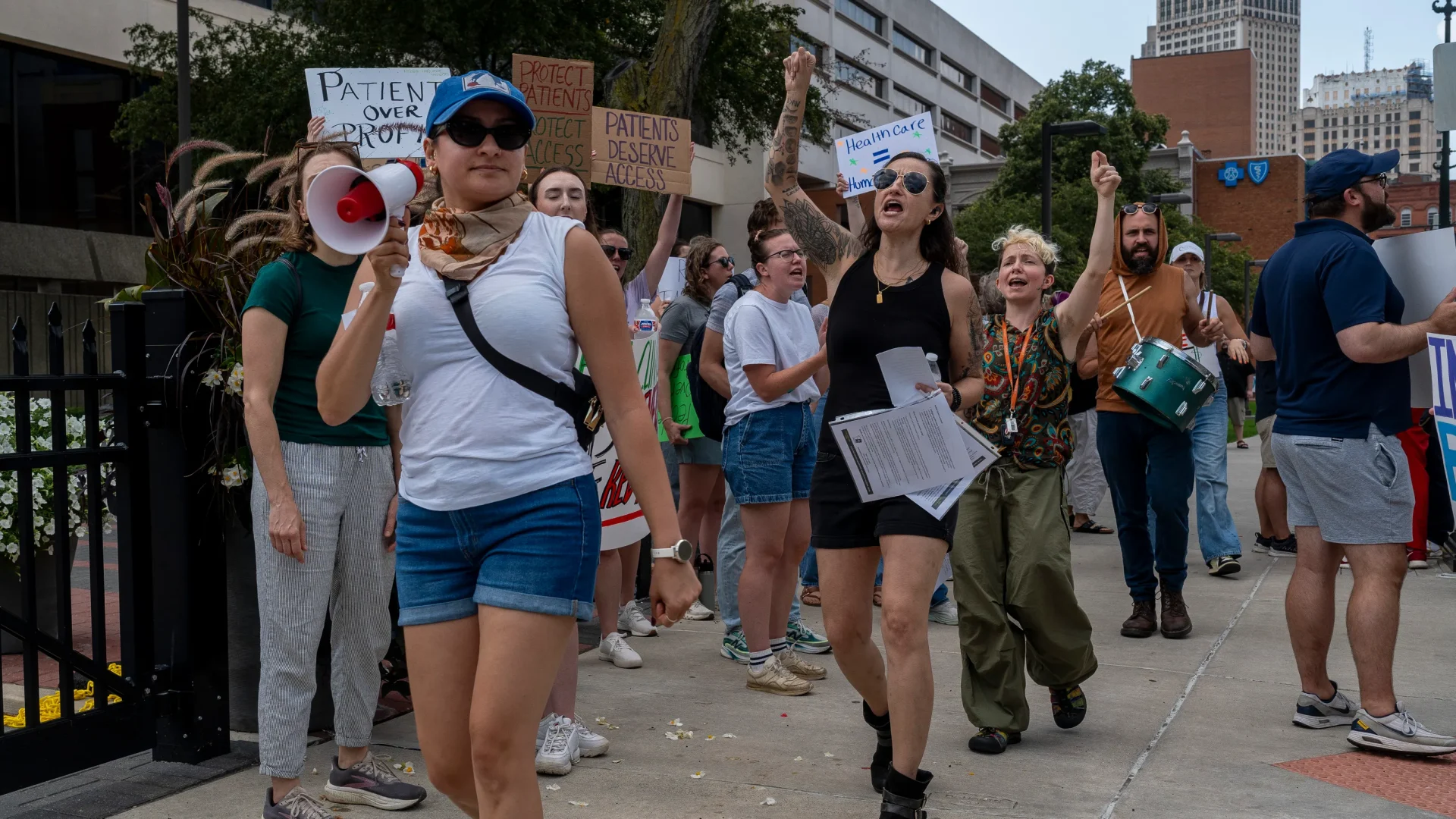
Protesters gathered outside the Blue Cross Blue Shield of Michigan headquarters in Detroit last week to denounce a looming billing policy change that critics say will devastate access to mental health care. Starting March 1, the state’s largest insurer will stop covering limited-licensed mental and behavioral health providers who operate in private practice, limiting coverage only to those working within accredited facilities. While the company claims the shift is necessary to standardize billing and eliminate fraud and waste, advocates argue it is a corporate cost-cutting measure that targets one of the most fragile sectors of the healthcare system.
The potential fallout is significant given that Blue Cross controls roughly 70 percent of Michigan’s commercial insurance market. Christopher DeBoer, president of the Michigan Mental Health Counselors Association, noted that limited-licensed practitioners make up about 20 percent of the state’s behavioral health workforce. By removing their ability to bill for these members, he warns that thousands of residents may suddenly lose access to essential services during a time when provider shortages are already critical. Many fear this gap in care could lead to an increase in psychiatric crises and higher suicide rates among vulnerable populations who cannot afford out-of-pocket costs.
The emotional toll was evident during the demonstration as families shared personal stories of stability being threatened. Ashley Mosley, a widowed mother from Muskegon, spoke through tears about her four children’s reliance on a limited-licensed therapist who accommodates their evening schedules. For many patients, finding a provider they trust is a grueling process; losing that connection due to an administrative change feels less like a policy update and more like a profound loss. Similarly, early career clinicians expressed concern over how they will complete their required licensing hours if their client bases vanish overnight.
Adding weight to the protest were several political figures, including U.S. Senate candidate Dr. Abdul El-Sayed, alongside representatives from the National Association of Social Workers Michigan. Organizers emphasized that because this policy affects multiple professions simultaneously—including social workers and psychologists—a unified front is necessary to force a reversal. As the March deadline approaches, activists continue to urge policymakers and company executives to recognize that treating mental health infrastructure as a line item for efficiency may carry a human cost far greater than any perceived financial saving.