
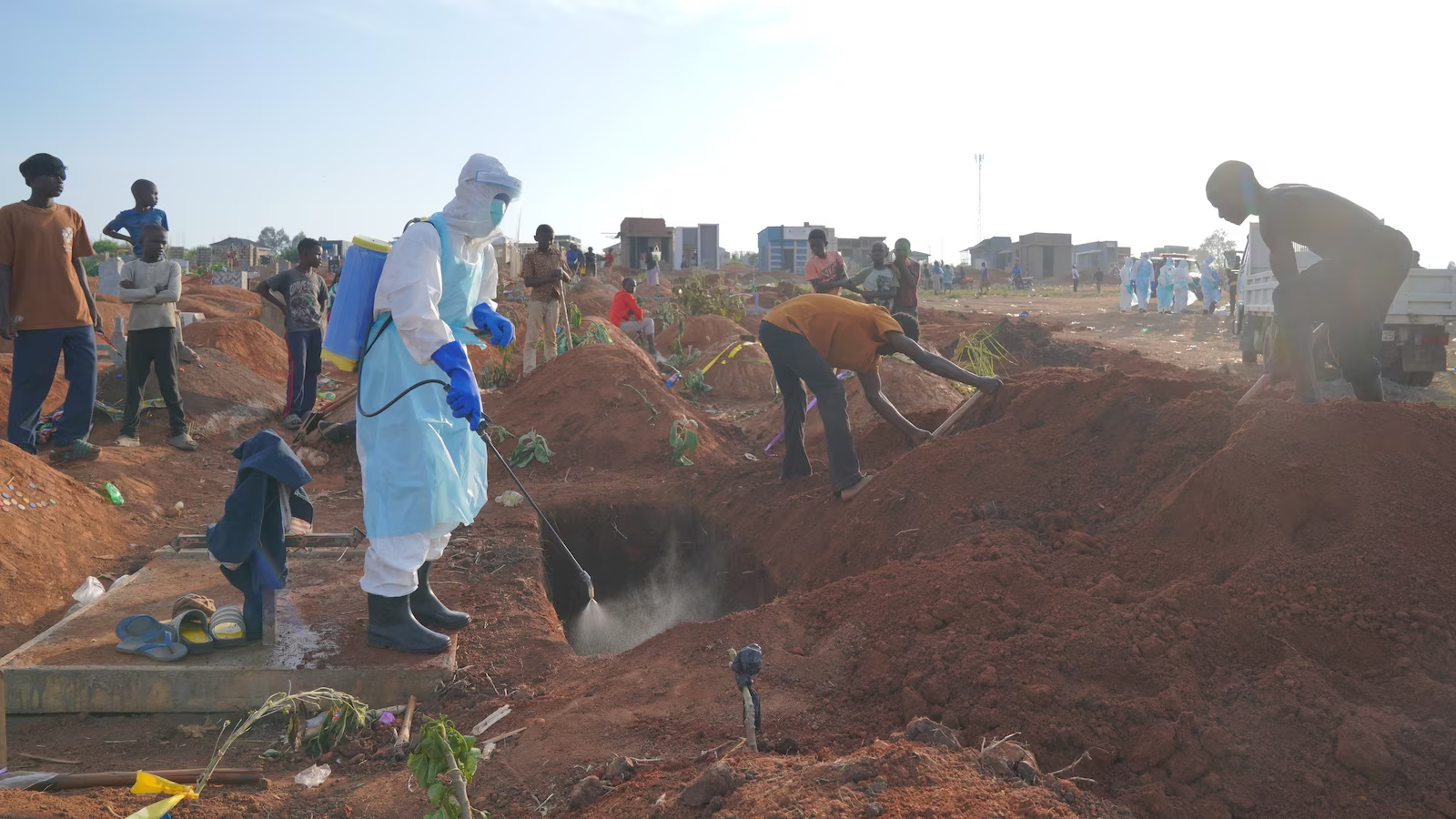
The Democratic Republic of Congo is grappling with its deadliest Ebola crisis to date, as a fast-moving outbreak has claimed more than 2,300 lives. Government data released Monday reveals a staggering total of 4,945 cases, marking the seventeenth time the nation has faced the virus but the first time it has reached such catastrophic proportions. This current surge has already eclipsed the grim totals of the 2018 to 2020 epidemic, with recent reports showing dozens of new infections and deaths occurring every single day.
Health officials are particularly alarmed because this specific strain, known as the Bundibugyo virus, currently lacks approved vaccines or treatments. While clinical trials are underway in the epicenter of Ituri province, the virus continues to spread rapidly across six eastern provinces. The World Health Organization warns that the trajectory of this outbreak is exceptional and could potentially rival the devastating West African epidemic seen between 2014 and 2016, which remains the deadliest on record globally.
The response effort is facing a perfect storm of logistical and social hurdles that make containment nearly impossible. Medical teams are struggling against crumbling road infrastructure and active threats from local rebel groups, while many frontline health workers have gone on strike due to missing paychecks. These challenges are compounded by deep seated mistrust within traumatized communities and a wave of misinformation claiming that the disease does not actually exist.
In response to the escalating emergency, United Nations humanitarian chief Tom Fletcher recently allocated an additional 30.5 million dollars and deployed twenty more specialized staff members to support those fighting on the front lines. Describing the situation as a critical wake up call, Fletcher emphasized that international solidarity and rapid scaling of resources are necessary immediately if they hope to stop the virus from outpacing their ability to treat it.