
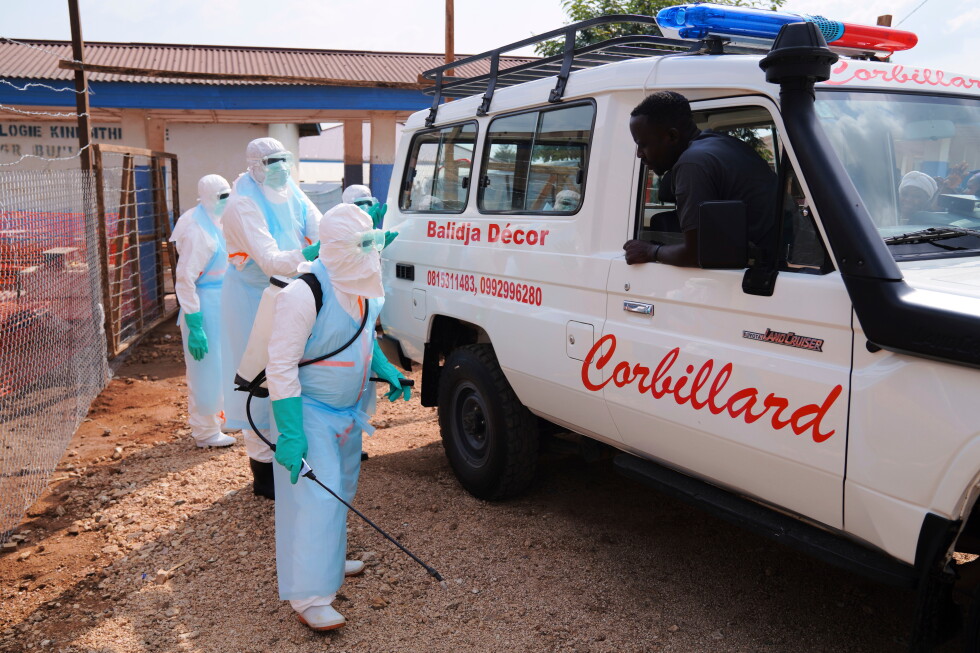
Ebola has now claimed more than 1,500 lives in eastern Congo, marking what health officials are calling the fastest-growing outbreak of the disease on record. According to government data released Thursday, 3,442 cases had been logged as of Tuesday with 1,521 deaths, representing a roughly 50 percent jump in just the past week. The Africa Centers for Disease Control and Prevention said part of that sharp increase stems from a backlog of cases and deaths that had not yet been formally confirmed or entered into records.
The outbreak, declared on May 15, has been tied to the Bundibugyo strain of the virus, for which there are currently no approved vaccines or treatments. That reality has deepened an already dire situation in a region where response efforts have been hobbled by delayed contact tracing, treacherous access to remote communities, deep-seated mistrust of authorities, and violence from armed groups. Nearly 90 percent of cases are concentrated in Ituri province, though infections have been confirmed across five provinces, including the major city of Kisangani.
Africa CDC Director-General Dr. Jean Kaseya said Thursday that 63 percent of confirmed deaths over the past two weeks occurred outside of treatment centers, largely because of unsafe handling of infected bodies during traditional funerals. In some communities, burial customs involve touching the deceased, which is highly contagious given how Ebola spreads through bodily fluids such as vomit, blood, and semen. Restrictions on those practices, combined with widespread misinformation insisting the virus is not real, have fueled anger among residents and triggered attacks on health facilities.
In Ituri’s Nyakunde health zone, international partners supporting the Ebola response were forced to temporarily relocate after a July 15 assault on a hospital and treatment center that was sparked by a patient’s death. Chief medical officer Dr. Désiré Duabo warned that remaining medical supplies are nearly depleted after groups like Africa CDC and Mercy Corps pulled out. Officials say security has since stabilized and they are urging partners to return, with redeployment possible as early as next week. For now, local health workers continue operating under immense pressure, caught between the threat of infection and risks to their own personal safety.
This outbreak has killed people at a faster pace than any previous Ebola eruption, including the devastating 2014 to 2016 epidemic in West Africa that took roughly eight months to reach 1,000 deaths out of more than 28,000 reported cases. The World Health Organization says the global risk remains low since Ebola does not spread through the air like respiratory viruses do. But inside Congo, where instability and distrust continue to undermine containment efforts, the agency classifies the risk as very high.