
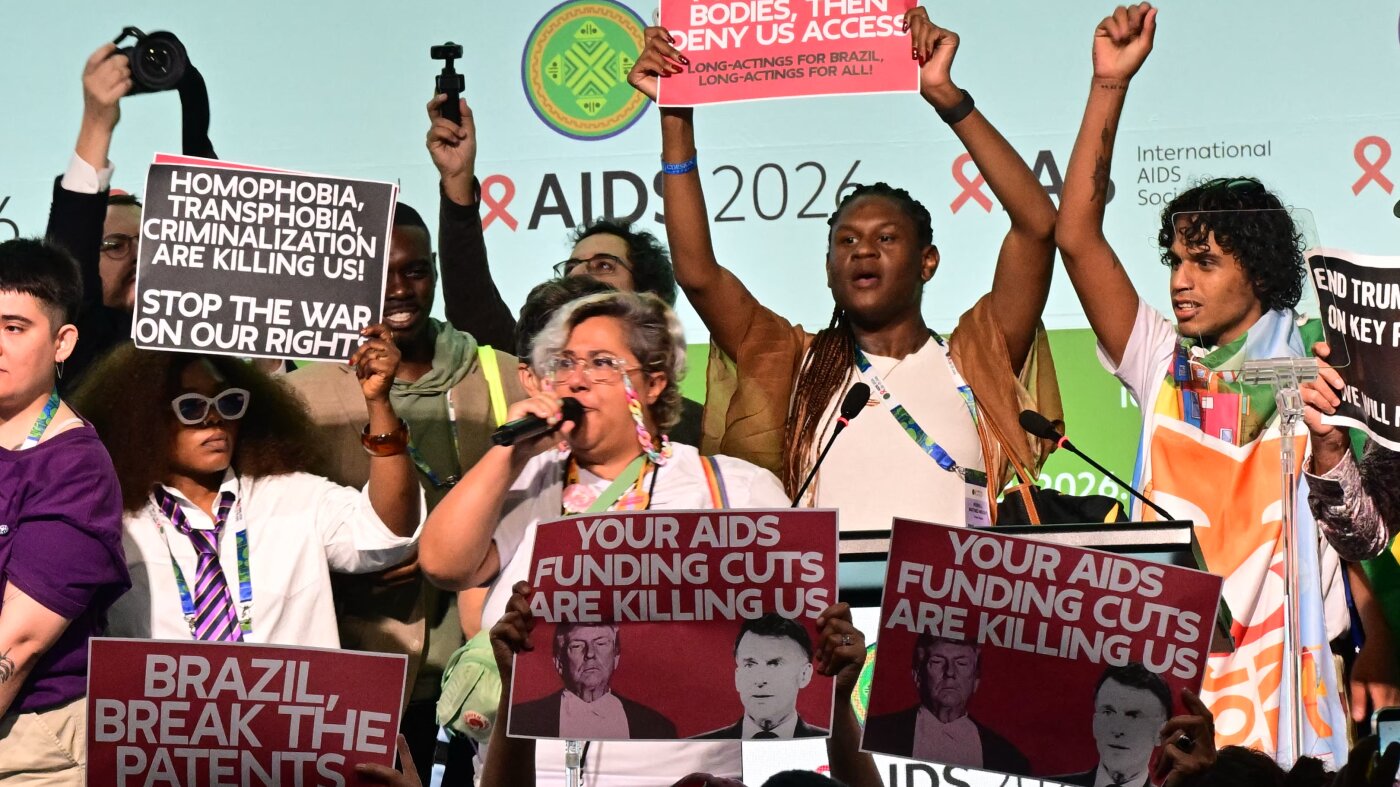
Thousands of researchers, activists, and health professionals gathered in Rio de Janeiro this week for the International AIDS Conference, confronting a question that would have seemed unimaginable just a few years ago: whether the global fight against HIV can survive the withdrawal of American support. The conference theme, “Rethink. Rebuild. Rise,” takes on an almost painful irony against the backdrop of Trump administration cuts that have gutted programs once considered untouchable. While there are genuine reasons for hope — AIDS-related deaths fell to their lowest level in three decades last year — those gains now feel precarious, threatened by funding reductions that have already forced clinics to close and treatment programs to scale back.
Winnie Byanyima, executive director of UNAIDS, did not mince words at Monday’s opening press conference. The question is no longer whether the world can end AIDS, she said, but whether it chooses to. Her own agency faces an uncertain future after the U.N. secretary-general proposed shutting it down by year’s end as part of broader efforts to shrink the international body. That proposal met pushback, and no final decision has been made, but the mere suggestion underscored how thoroughly the landscape has shifted.
Much of the anxiety centers on PEPFAR, the celebrated program launched under President George W. Bush that became the backbone of global HIV relief. The Trump administration cut its budget by thirty percent last year, and Congress’s attempt to restore full funding produced little practical result, with the State Department spending only seventy percent of what was available. A new survey from the nonprofit amfAR paints a stark picture of the consequences: more than seventeen hundred clinics and service providers have shut down, community-based programs hit harder than large international organizations, and prevention efforts targeting vulnerable populations devastated. The State Department has dismissed the report’s methodology as flawed and insisted the administration has strengthened the program through clearer strategic direction. Meanwhile, the administration has announced it will permanently cease all PEPFAR funding by early 2027.
Even as these funding crises deepen, scientists at the conference are presenting results that should represent triumph. Trials of lenacapavir, a twice-yearly injection, showed superior efficacy in preventing HIV transmission compared to daily pills. A weekly oral medication demonstrated similar effectiveness with minimal side effects. These breakthroughs could transform both treatment and prevention, making it dramatically easier for people living with HIV to suppress their viral load and protect their partners. But Dr. Kenneth Ngure, president-elect of the International AIDS Society, voiced what many attendees are quietly fearing — that without money to scale up distribution, these medications may never reach the people who need them most. The science is moving forward. The political will to pay for it may not be keeping pace.